WomensGolf.com — Discovery Slider v3.3
How do I get more distance off the tee? Need driver distance? Try Lesson Discovery →
Why am I hitting my irons fat? Iron contact issues? Identify Your Focus Here →
How do I get out of bunkers more easily? Stuck in bunkers? Find Your Starting Point →
Help me stop missing short putts? Putting problems? Get Jane's First Check →
I need more confidence on the course Lacking confidence? Take the 30-Second Quiz →
Never lose a lesson again. Save videos to your own library.

The Left Heel in the Golf Swing Question: On or Off the Ground?

Most of the right handed golfers I teach ask me the left heel question. Should it stay on the ground or is it okay to allow it to detach?

Most of the right handed golfers I teach ask me about their left heel at the top of the backswing. Should it stay on the ground or is it okay to allow it to detach? I usually respond by allowing them to do either, as long as it is not a conscious thought either way and that proper transfer and torque in the swing is created without possibility of injury.

I tend to believe that the more supple you are, the less likely it will be that your left heel will detach. However, the more backswing coil you are trying to produce will make it more likely to detach. Thus, it could be likely that you will get some heel “lift” on your tee shots where you are striving for distance and perhaps less heel “lift” on your shorter iron shots for accuracy.
Many top instructors are promoting minimal or no lower body action in the backswing. While I tend to agree with quieting overactive lower body motion, I feel like this suggestion has minimized or eliminated footwork for most students. Good footwork is necessary in all sports and certainly important in the execution of an effective golf swing. I think that when your footwork is right, your lower body action can be quiet but efficient. Good footwork leads to the proper order of movement in the swing with a solid pivot and turn.

At setup, the weight is generally balanced on both feet. It should never favor being forward towards the toes, instead of over the entire (both) foot with your tendency to be more back towards the heels instead of the toes. As the backswing starts, there is a feeling of a slight weight shift off the inside of the left instep with a constant increase of weight shift to the inside of the right foot towards the right heel, onto the right leg. This sets a one-legged axis of sorts.
On the backswing, the left knee breaks inward and outward simultaneously, staying in sync with the release of the left side in the tak eaway. Too much left knee movement causes slack in the legs and a lateral slide (sway). The left knee, ideally, should point no further than your centerline. The right leg does not lock, but may slightly straighten/extend to “post up” against the braced right knee.

If you have loaded the right side well, an upper body torso turn may be easier to accomplish due to the body being in a position that enables an upper body turn against a lower body with minimal hip turn to create torque. This is like a spring being wound in your hips and torso, then unwound with a torquing power that accelerates the shoulders, arms, and club. Many believe that the hips turn about 40 – 45 degrees and the chest/shoulder turn is 80 – 90 degrees, creating the gap necessary for powerful torque. Not everyone can achieve this due to range of motion and flexibility, but a shift and turn will create good power into and through the golf ball.

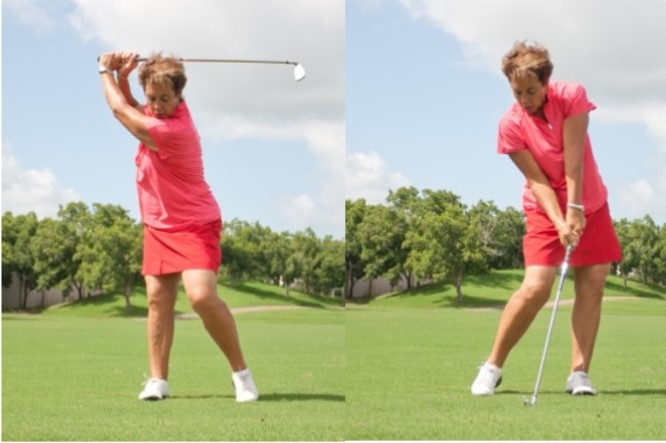
The left heel, if it detaches near the top of the backswing, does so only as a chain reaction response to the coil of the upper body which in turn pulls the hip upward, exerting an upward pull on the lower left leg and foot. If it moves off the ground, the left heel is the last thing to move. My preference is to allow this to happen; don’t fight it consciously. Most people are not supple enough to make a 90 degree shoulder turn while keeping the left heel down. Additionally, we feel much of our rhythm through our feet. Detaching and replanting the left heel promotes the correct sequence and good footwork. Good footwork is the benchmark of champions in all sports. Most golfers make a much better weight transfer when they detach the heel slightly. Golfers who leave the heel down tend to swing flat footed and overuse the upper body. This not only increases the chance for injury, but there may be a significant power loss in the swing motion.

If you feel like you can accomplish this torque with your left heel down and feel comfortable with your golf swing (distance and direction), you should leave things as they are. If you are having trouble pivoting, you may have to allow your left heel to detach. When you walk, one foot releases to transfer weight onto the other foot. Thus, it may be more natural than you believe. Ben Hogan, Jack Nicklaus, Byron Nelson, Bobby Jones, Sam Snead, Hale Irwin, Tom Watson, Nick Price, Ben Crenshaw, Johnny Miller, Laura Davies, Julie Inkster, Patty Sheehan, and Karrie Webb seem to think it is a natural thing to do. Either way, work on your strength/flexibility and you will be able to create more energy in your swing motion!

Jane Filing

Join My Next New Member Cohort (13 spots remain)

Because I personally review every new member’s frustration to create a custom starting plan, I limit new member intake. Access 1,300+ lessons with my guidance for $6.25/month (billed yearly). If you aren't delighted in 30 days, I’ll give you a 100% refund—no questions asked.

Secure my spot & start my plan
Jane Filing

Let's Get Started

A message from Jane Filing

Welcome to professional golf instruction built by women, for women. Ad-free, personally curated, and guided by me from day one.

Because I personally review every new member’s #1 frustration to create a custom starting plan, I limit the new member intake to ensure a high-touch experience.

Try membership risk-free for 30 days. If you aren't delighted with your progress, I'll give you a 100% refund—no questions asked.

Jane
Only 13 spots left for this week's cohort
Founders Legacy Rate (from 2019)

$6.25/month

billed yearly at $75
  • All 1,300+ ad-free video lessons
  • Fast easy search and filtering
  • Jane's personal lesson recommendations
  • Private Women's Golf Group
Claim my spot
Jane Filing

Got a question or need a hand finding the right lesson? Send me a quick note—I read and reply to every message personally.

Email Jane Directly
Lesson Discovery Tool Cover

Which part of your game frustrates you most?

Jane Filing
Jane Filing — Your Guide

I have lessons waiting for you on . Join today and I'll point you to your first lesson.

Join today for $75/year
30-Day Money-Back Guarantee Your $75 rate never increases
Premium Feature

Bookmarking is a premium feature. Join today to instantly build your own saved lesson library!

Live Lesson Favorites

Videos currently being watched by Women’s Golf members

When Putting Under Pressure Try This to Stay Still - Kellie Stenzel - Womens Golf
When Putting Under Pressure Try This to Stay Still
For shorter, high-pressure putts, stillness is key. Kellie Stenzel shows how to be "painfully" still to ensure solid contact. If you tend to move your lower body or get nervous, try turning your toes in.
Tempo and Timing - The Keys to Consistent Putting - Shawna Elliott - Womens Golf
Tempo and Timing: The Keys to Consistent Putting
Boost your confidence on the green as PGA Instructor Shawna Elliott demonstrates the essential principles of a successful putting stroke, focusing on a "one and two" tempo, light grip pressure, and a natural pendulum motion to prevent deceleration at...
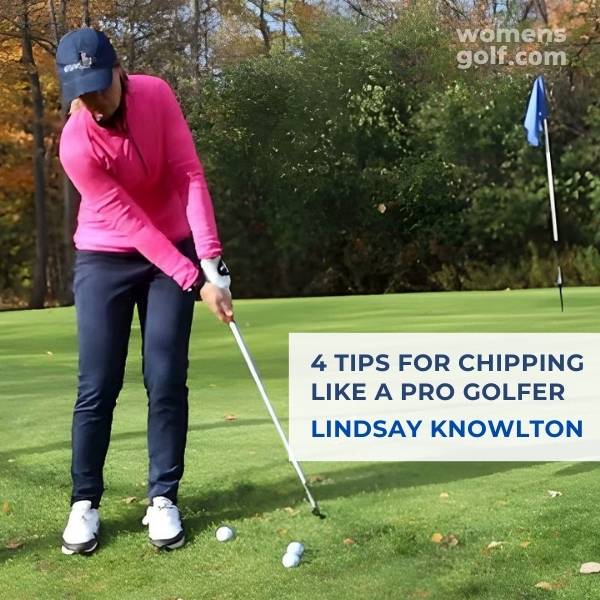
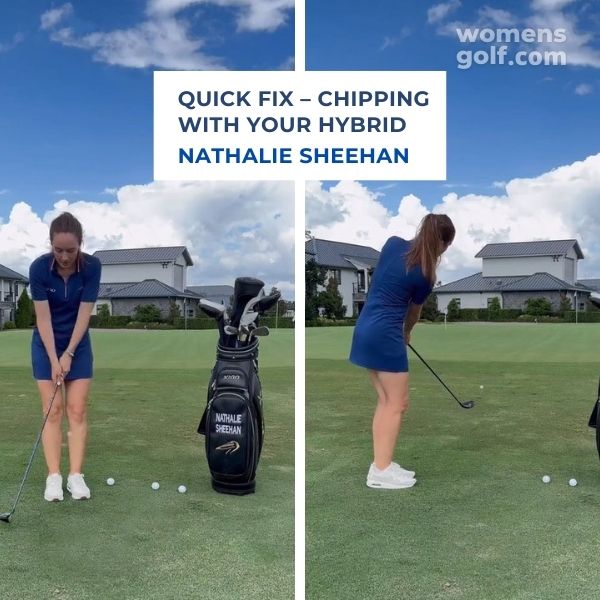
Nathalie Filler hitting a chip shot
The Proper Setup for Perfect Chip Shots
Learn the fundamentals of chipping with LPGA professional Nathalie Filler. This lesson covers everything from club selection to proper setup, focusing on a shot that stays low and rolls toward the hole.

28 Instructors. 1 Guide.

You don't need more content; you need the right content. While our library features over 1,300 lessons from 28 of the world's best female LPGA and PGA instructors, you won't have to navigate it alone.

As your Online Golf Guide, Jane Filing personally reviews your #1 golf frustration and hand-picks the exact lessons you need to start improving today. It is personalized guidance designed to help you play your best golf.

Womens Golf Instructors
Jane Filing women's golf

Jane’s Hand-Picked Lessons

Spot the Grain - Every Pro Uses this Green Reading Trick - Kellie Stenzel - Womens Golf
Spot the Grain. Every Pro Uses this Green Reading Trick!
Did you know that the direction the grass is growing—the grain—affects both the speed and curve of your putt? Kellie Stenzel shows you a simple visual trick to read the grain, helping you adjust your speed and line for more accurate putts, especially...
Color-Coded Control - Can't Fail Putting Distance Drill - Heidi Richardson - Womens Golf
Color-Coded Control - Excellent Putting Distance Drill
Looking for a more engaging way to practice putting? Discover Heidi Richardson’s color-coded system that builds better target recognition and muscle memory for every putt on the course.
Sequencing and Separation - Exercises for a Powerful Turn - Karen Palacios Jansen - Womens Golf
Swing Sequencing and Separation: Exercises for a Powerful Turn
Improve your power and sequence with Karen Jansen as she demonstrates drills (like the Cross-Crawl and Running Man) to enhance the rotational separation between your torso and your hips during the golf swing.

The Women's Golf Community

Members discuss lessons, share wins and support each other every day in our private Women’s Golf Group on Facebook.

Tell us about the part of your game you’d like to improve, and Jane will send you the ideal lesson from our 1300+ library.

members' newsletter

Every weekend Jane sends Women’s Golf members an email newsletter with the week’s lessons and highlights from the Women’s Golf Group.

Guest lessons are limited – Join for full benefits